


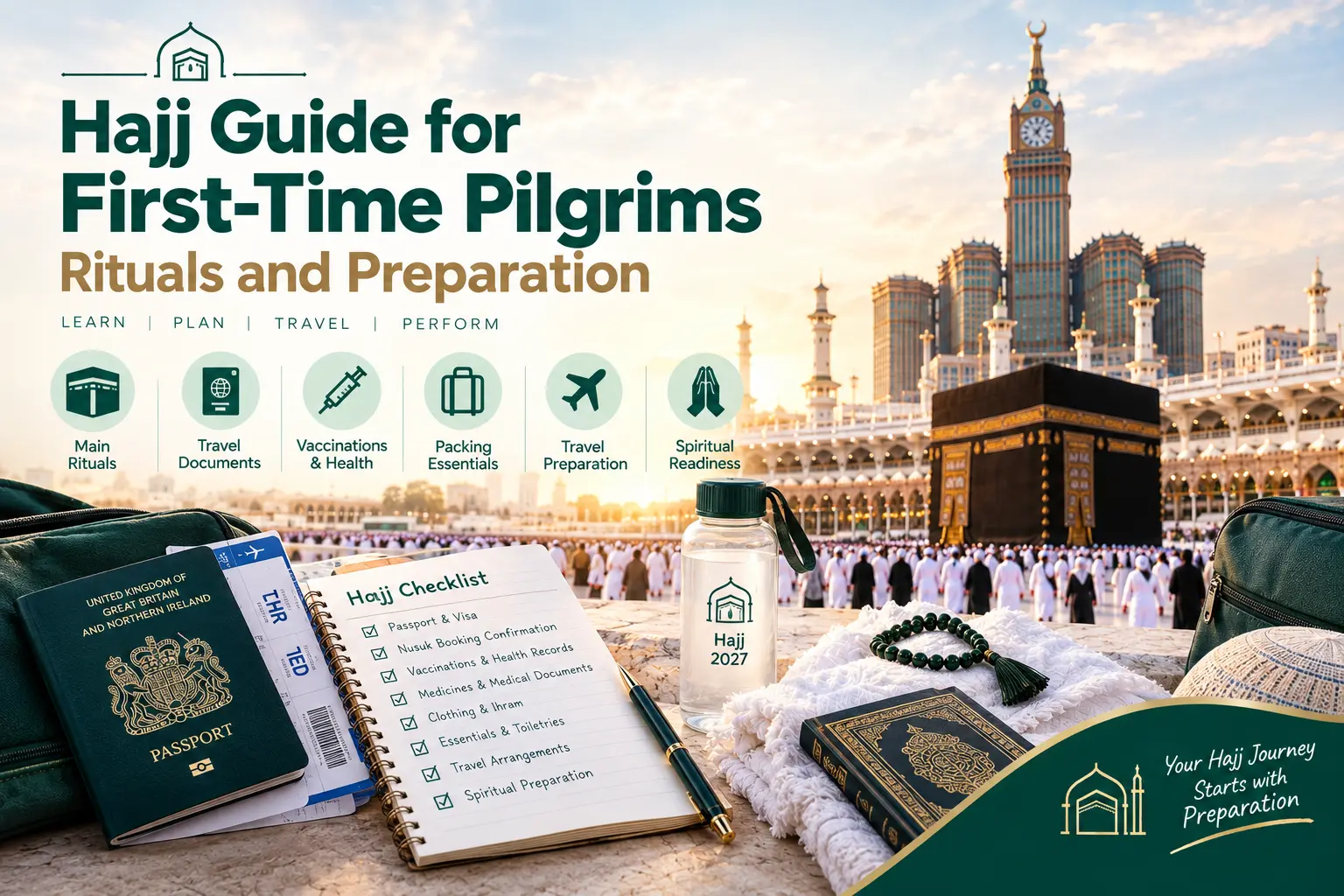
Performing Hajj for the first time is a deeply meaningful milestone. Alongside the spiritual excitement, many pilgrims have practical questions: What are the main Hajj rituals? What happens on each day? How should you prepare physically and spiritually? And what should you take with you?
This beginner-friendly Hajj guide explains the main stages of the pilgrimage, outlines essential preparations and highlights practical steps to help you approach the journey with greater confidence.
Hajj takes place on specific dates in Dhul Hijjah, the final month of the Islamic calendar. Its rites must be performed according to the prescribed requirements, so first-time pilgrims should study a reliable guide and seek qualified religious guidance where needed.
Understanding the Main Rituals of Hajj
Before travelling, familiarise yourself with the key rituals and their purpose. The exact details can differ according to the type of Hajj you perform and the scholarly guidance you follow.
1. Entering Ihram
Ihram is the sacred state a pilgrim enters with the intention of performing Hajj, accompanied by the prescribed Talbiyah. It is not simply the clothing worn during pilgrimage.
Men generally wear two plain, unstitched cloths, while women wear modest clothing that meets Islamic requirements. Specific rules apply while in Ihram, including restrictions relating to fragrance, hair and nails, and marital relations.
Before departure, learn when and where you must enter Ihram according to your route. Pilgrims travelling by air should arrange this before crossing the relevant Miqat boundary, following their group’s instructions and qualified guidance.
2. Tawaf Around the Ka’bah
Tawaf involves circling the Ka’bah seven times in the prescribed manner. Different forms of Tawaf are associated with different stages of pilgrimage, so it is important to understand which one applies to your Hajj.
The Grand Mosque can become extremely crowded. Follow official instructions, avoid pushing and do not put yourself or others at risk to reach a particular spot. If you are unsure about the requirements for a specific Tawaf, ask a qualified scholar or your authorised Hajj guide.
3. Sa’i Between Safa and Marwah
Sa’i involves travelling between Safa and Marwah seven times, beginning at Safa and finishing at Marwah. It commemorates Hajar’s search for water for her son, Isma’il (peace be upon him).
The rules and timing of Sa’i depend on the type of Hajj and the rituals already completed. Learn the correct procedure for your circumstances rather than assuming every pilgrim follows an identical itinerary.
4. Spending Time in Mina
Mina is an important part of the Hajj journey. Pilgrims travel there during the Hajj period and observe the prescribed acts of worship according to the applicable schedule.
Prepare for shared facilities, busy walking routes, and hot weather. Keep your accommodation details and group contact information accessible, and follow your authorised provider’s instructions about movement between the holy sites.
5. Standing at Arafat
The standing at Arafat, known as Wuquf, is a central pillar of Hajj. Pilgrims spend this important period in worship, supplication, remembrance of Allah and seeking forgiveness.
For many people, Arafat is one of the most emotionally significant parts of the pilgrimage. Plan your water, essential medication, shade and rest carefully, and follow the arrangements provided for your group.
6. Travelling to Muzdalifah
After leaving Arafat according to the prescribed schedule, pilgrims travel to Muzdalifah. They perform the relevant prayers and spend time in worship and rest according to the rules of their Hajj.
Conditions can be physically demanding, and facilities may be busy. Wear suitable footwear, keep your essentials with you and follow official instructions rather than separating from your group.
7. Rami, Sacrifice and Cutting the Hair
Rami refers to throwing pebbles at the Jamarat at the prescribed times. The details depend on the day and the relevant rulings. Pilgrims must follow crowd-management instructions and never push through dense crowds.
For pilgrims whose type of Hajj requires a sacrifice, this must be arranged through the applicable authorised process. Pilgrims also perform the prescribed shaving or trimming of hair when required.
The order and timing of these actions, and the point at which particular Ihram restrictions are lifted, can vary according to the relevant rulings and circumstances. Ask a qualified scholar or authorised Hajj guide if you are uncertain.
8. Tawaf al-Ifadah and the Remaining Rites
Tawaf al-Ifadah is an essential rite of Hajj. Sa’i may also be required, depending on the type of Hajj and what has already been completed.
Pilgrims then observe the remaining prescribed rites, including Rami on the relevant days and the required stay in Mina. Before leaving Makkah, many pilgrims must also complete Tawaf al-Wada, subject to its rules and applicable exemptions.
Because mistakes can have religious consequences, use a trusted Hajj guide for the detailed sequence rather than relying on a short online summary alone.
How to Prepare for Hajj for the First Time
Good preparation can make the journey more manageable, especially when you are navigating unfamiliar places and large crowds.
Prepare Spiritually
- Learn the main Hajj rites before travelling.
- Understand the difference between the types of Hajj and which one you will perform.
- Learn the Talbiyah and the essential supplications you wish to recite.
- Make sincere repentance, seek forgiveness from others and settle outstanding obligations where possible.
- Ask a qualified scholar about questions specific to your circumstances.
Prepare Physically
Hajj can involve extensive walking, waiting and exposure to heat. If appropriate for your health, gradually build your walking stamina before departure. Discuss any medical concerns with your healthcare professional and plan how to manage existing conditions.
Keep essential medicines in their original packaging where possible, carry them according to medical advice and check Saudi Arabia’s current rules for bringing medication into the country.
Drink water regularly, use suitable sun protection and rest when needed. Seek assistance promptly if you feel unwell.
Organise Your Documents
Before departure, check that you have the required travel documents and that your details match your booking. Keep copies of your passport and important travel information separately from the originals.
For UK pilgrims, the UK government’s current guidance states that Hajj places can only be booked through the official Nusuk Hajj platform. Eligibility, registration arrangements and available services must be checked against the rules for the relevant Hajj season. Do not assume that requirements for one year automatically apply to the next.
Review the latest GOV.UK pilgrimage guidance and the official Nusuk Hajj platform before making arrangements.
Pack Practical Essentials
Your packing list should reflect the package, accommodation and facilities available to you. Common essentials include:
- Ihram garments appropriate to your circumstances.
- Comfortable, well-tested walking footwear.
- A small bag for daily essentials.
- Unscented personal-care products suitable for use during Ihram.
- Prescribed medicines and relevant medical information.
- A phone, charger and suitable power adapter.
- Identification, accommodation details and group contact information.
- Weather-appropriate clothing and sun protection for use when permitted.
Confirm the precise packing requirements with your provider and religious guide. Avoid overpacking, as you may need to carry your belongings through busy areas.
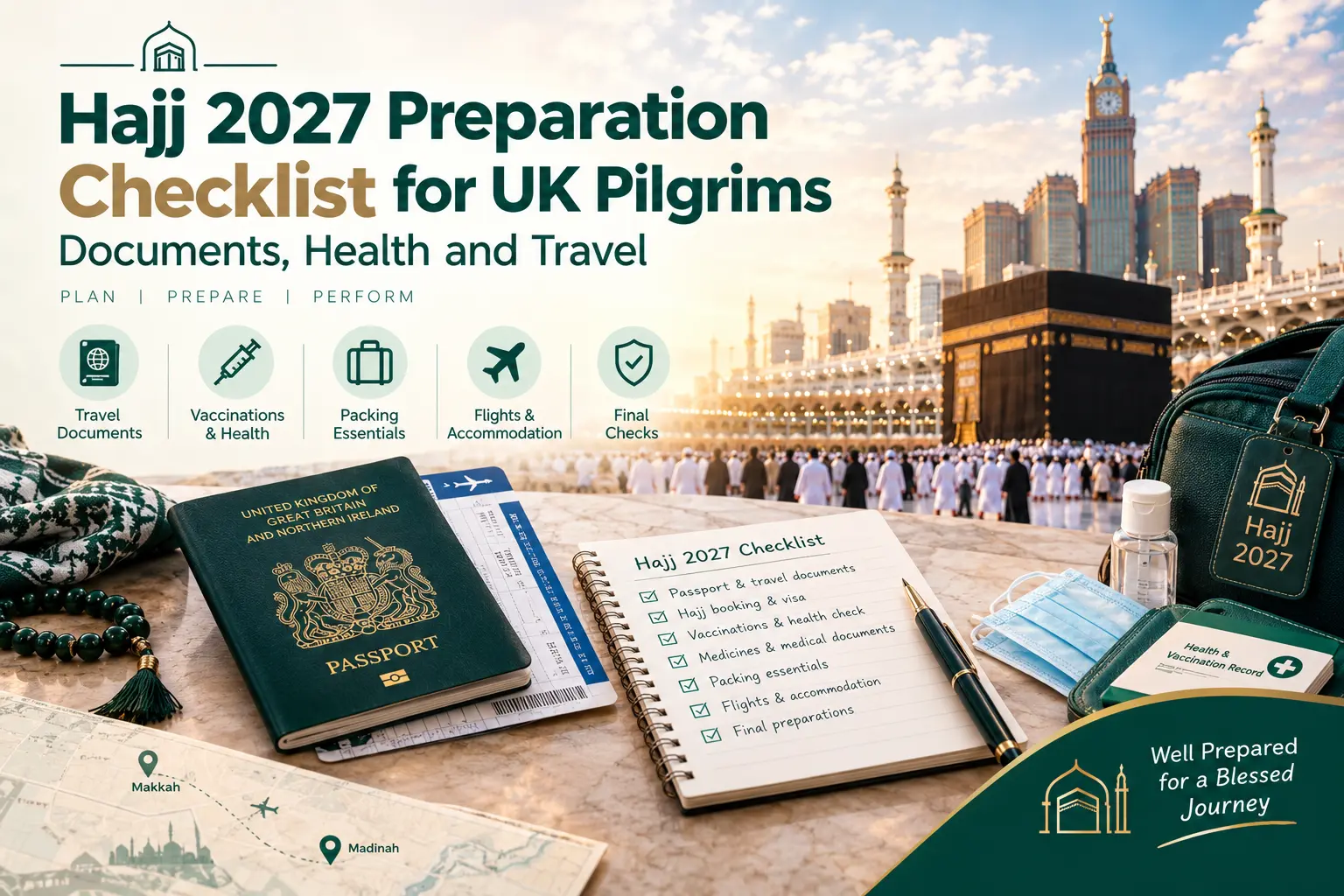
Hajj Preparation Checklist
Use this checklist before leaving home:
- Learn the main rituals and the type of Hajj you will perform.
- Confirm your eligibility and booking through the applicable official process.
- Check your passport, visa, and travel documentation.
- Review current vaccination and health requirements.
- Arrange prescribed medication and medical advice.
- Save your accommodation, transport and group contact details.
- Prepare suitable clothing, footwear and essential supplies.
- Understand your group’s schedule for Mina, Arafat and Muzdalifah.
- Ask a qualified scholar about any unresolved religious questions.
- Keep copies of important documents and written booking information.
Health and entry requirements can change. Check the current official guidance before travelling rather than relying solely on an older checklist.
Choosing Hajj Support and Travel Arrangements
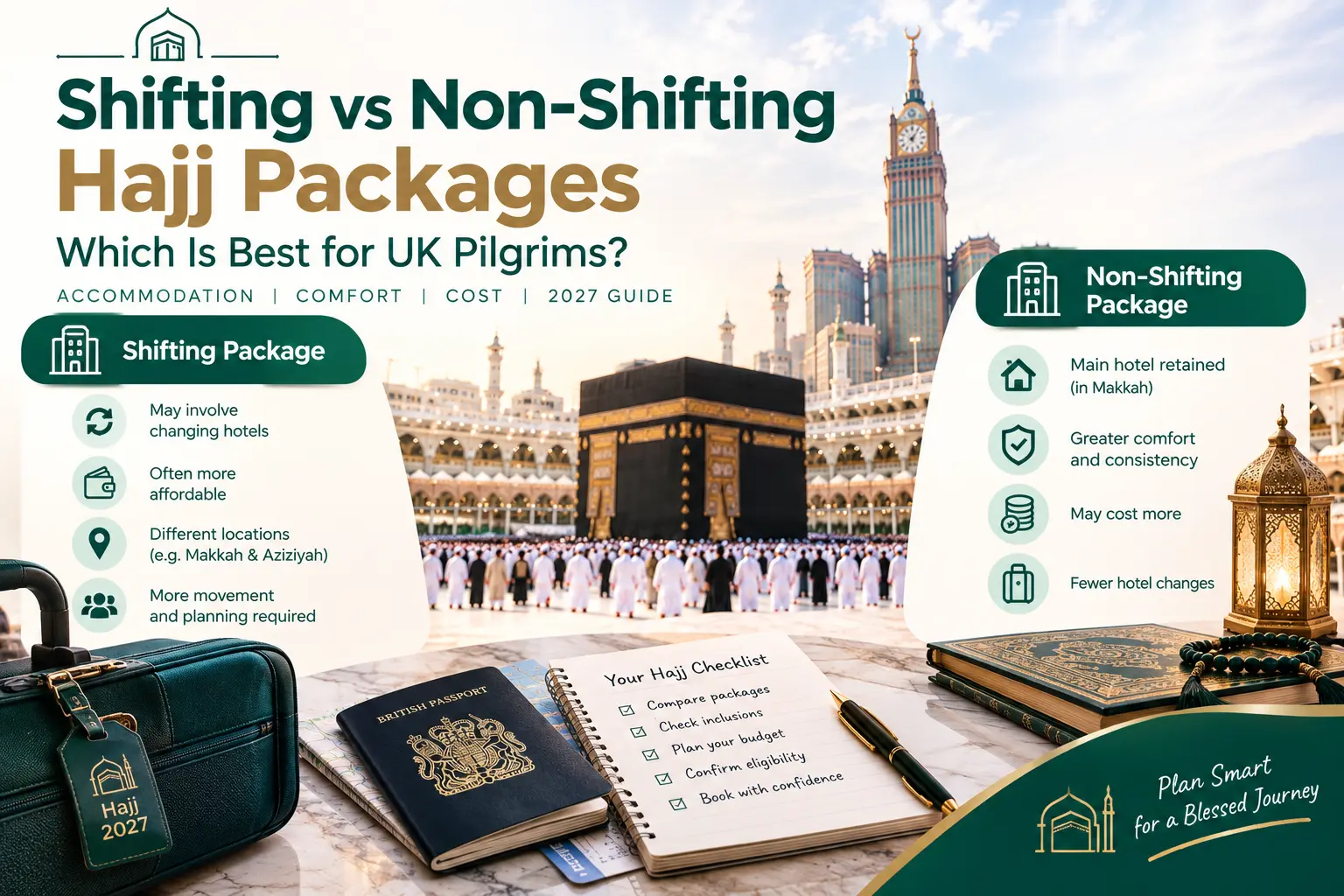
For first-time pilgrims, clear information and reliable support are especially important. Before committing to any arrangement, understand how your booking is made, what services are included, where you will stay and how transport between the holy sites is organised.
For UK travellers, follow the official Nusuk process applicable to your eligibility and country. Do not assume that a private travel offer guarantees a Hajj place. Read the terms carefully, retain written confirmations and keep a record of payments.
You can explore our Hajj packages information for relevant guidance, review our Hajj guide for further learning and read our Hajj preparation checklist for UK pilgrims for practical planning. Publish or use the final internal link only once that article is live.
Frequently Asked Questions
What are the main rituals of Hajj?
The main rites include entering Ihram, the prescribed Tawaf and Sa’i, standing at Arafat, the journey to Muzdalifah, the relevant rites in Mina, Rami and Tawaf al-Ifadah. The precise sequence depends on the type of Hajj and the applicable rulings.
How many days does Hajj take?
The principal Hajj rites take place during specific days of Dhul Hijjah, commonly described around the 8th to 13th. The length of a traveller’s overall trip depends on flights, accommodation and the arrangements for that season.
What should first-time pilgrims learn before Hajj?
Start with the requirements of Ihram, the main rites and their sequence, the type of Hajj you will perform, and the practical arrangements for Mina, Arafat and Muzdalifah. Seek qualified religious guidance for detailed rulings.
What should I pack for Hajj?
Pack the clothing required for Ihram, comfortable footwear, essential medicines, identification and travel documents, a phone charger and practical personal-care items. Check your provider’s instructions and the current official requirements before departure.
How can UK pilgrims check Hajj booking requirements?
Check the official Nusuk Hajj platform and current GOV.UK pilgrimage guidance. Eligibility and arrangements can vary by season, so verify the rules for the year you intend to travel.
Is Hajj physically demanding?
Hajj can involve long walks, crowds, waiting and hot weather. Prepare within your physical ability, discuss health concerns with a healthcare professional and follow official safety instructions throughout the journey.
Prepare for Your Hajj Journey with Knowledge and Care
Hajj is an act of worship that deserves thoughtful spiritual, practical and physical preparation. Learning the rituals in advance, organising your documents, understanding your travel arrangements and seeking reliable religious guidance can help you approach the journey with greater confidence.
For further information, explore the Hajj resources available on Umrah Al-Amanah and consult the official authorities for the latest requirements before making travel decisions.