



Experience a journey like no other with our all-inclusive Egypt Cultural Tour, specially curated for UK-based Muslim travelers.
Egypt is not only a cradle of ancient civilizations but also a land deeply woven into Islamic history. Mentioned in the Holy Qur’an, this sacred land holds spiritual, historical, and educational value for believers and history enthusiasts alike.
Whether you’re drawn to the iconic Pyramids of Giza, the revered Al-Azhar Mosque, or the spiritual stories of Prophet Musa (AS) and the Pharaoh, our tours are designed to enrich your soul and broaden your perspective.


Direct Flights

5 Nights | 6 Days


Air condition Transport


Tours & Excursions
Umrah Al-Amanah offer travellers an unforgettable journey through ancient wonders and vibrant culture. Whether you’re dreaming of exploring the pyramids, cruising along the Nile, or discovering bustling Cairo, these tours provide tailored packages for UK travellers.
With options ranging from all-inclusive holidays to family-friendly adventures, you can explore iconic sites like Luxor and Aswan or relax at Sharm El Sheikh’s beaches. Many packages include flights from major UK cities like London, Manchester, and Birmingham, ensuring a smooth experience from start to finish.
For those seeking a more immersive experience, guided cultural tours cover historic temples and bustling markets. Alternatively, luxury Nile cruises provide a serene way to discover Upper Egypt’s treasures, such as the Valley of the Kings and Karnak Temple. Packages can also be customised to suit solo travellers, families, and groups, with options available.
Choosing these tours ensures you benefit from local expertise, ensuring every detail is taken care of—from airport transfers to hotel stays. Whether it’s a holiday package or a quick city break in Cairo, Egypt tours cater to diverse preferences, offering travellers a seamless and enriching experience. Start your journey today and discover the timeless allure of Egypt.

Transfer to your hotel in Cairo, Check in and overnight in Cairo.

1- Visit the Egyptian museum and the pyramids of Giza.
2- You will have the chance to go the papyrus and perfume factory.
3- Overnight at the hotel.

1- Breakfast at the hotel.
2- Visit Sultan Hassan mosque, Ibn Tulun mosque, Azahr mosque Jumah payer at Al Azhar if possible, then drive to Imam Shafai back to the hotel for rest.
3- Transfer to Nile Maxim Dinner cruise in Zamalek for dinner and show.
4- The boat sailing on the Nile for two.
5- Overnight at the hotel.

Visit the Islamic museum
1- Breakfast at the hotel.
2- Visit the Islamic museum, Hussin mosque, Khan El Khalily bazaar then Salah in Amr Ibn mosque if possible.
3- Presentation on the story of Mosa {AS}
4- Back to the hotel around noon free time at the hotel and overnight.

1- Breakfast at the hotel.
2- Free day in Muizz Street and Khan El Khalili for shopping.

Breakfast at the hotel transfer to Cairo airport for your final departure
Explore Egypt’s most iconic spiritual and historical landmarks with Umrah Al-Amanah
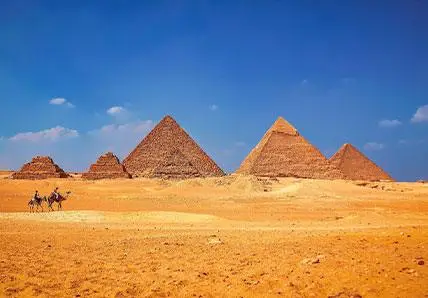
The oldest and largest of the three pyramids at Giza, known as the Great Pyramid, is the only surviving structure out of the famed Seven Wonders of the Ancient World. It was built for Pharaoh Khufu (Cheops, in Greek), Sneferu’s successor and the second of the eight kings of the fourth dynasty.

The Mosque-Madrasa of Sultan Hassan is a monumental mosque and madrasa located in Salah al-Din Square in the historic district of Cairo, Egypt. It was built between 1356 and 1363 during the Bahri Mamluk period, commissioned by Sultan an-Nasir Hasan
The Mosque of Ibn Tulun is located in Cairo, Egypt. It is one of the oldest mosques in Egypt as well as the whole of Africa surviving in its full original form, and is the largest mosque in Cairo in terms of land area. It is built around an open square courtyard which allows natural light to travel through


Al-Azhar Mosque (Arabic: الجامع الأزهر, romanized: al-Jāmiʿ al-ʾAzhar, lit. ’The Resplendent Congregational Mosque’), known in Egypt simply as al-Azhar, is a mosque in Cairo, Egypt in the historic Islamic core of the city. Commissioned by Jawhar al-Siqilli shortly after Cairo was established as the new capital of the Fatimid Caliphate in 970, it was the first mosque established in a city that eventually earned the nickname “the City of a Thousand Minarets”.
This the oldest archaeological museum in the Middle East, and houses the largest collection of Pharaonic antiquities in the world.


A mythical creature with the head of a human and the body of a lion. The statue facing directly from West to east. Located on the Giza Plateau on the West bank of the Nile of Nile, representing the pharaoh Kharfe.
The temple was built to serve two functions. it was used for the purification of the mummy of the king before its burial. And other was used for making the mummification process of the king.

Discover Egypt through a meaningful journey combining Islamic heritage, ancient history, cultural discovery and educational experiences. Designed for Muslim travellers from the UK, our Egypt tours explore the historic heart of Cairo alongside some of the world’s most remarkable ancient landmarks.
From Al-Azhar Mosque, Ibn Tulun Mosque and Sultan Hassan Mosque to the Pyramids of Giza, Great Sphinx and Egyptian Museum, the journey brings together different chapters of Egypt’s extraordinary history.
Egypt holds a unique place in both ancient and Islamic history. Following the arrival of Islam in the 7th century, Egypt became an important centre of Muslim civilisation, with Al-Fustat and later Cairo developing into major centres of scholarship, trade, architecture and culture.
Today, Cairo preserves an exceptional Islamic heritage through historic mosques, madrasas, markets, streets and monuments representing different periods of Egyptian history. At the same time, the country’s ancient sites provide an opportunity to understand the civilisation that existed centuries before Islam.
Our Egypt Islamic and Cultural Tours bring these historical layers together through guided visits, educational presentations and carefully planned experiences for UK travellers.
An Egypt tour offers much more than a conventional sightseeing holiday. It provides an opportunity to explore the country’s history through both Islamic heritage and ancient civilisation.
At Umrah Al-Amanah, we approach Egypt as more than a holiday destination. Our tours are designed to combine Islamic history, cultural heritage, education and comfortable travel into one meaningful experience.
With a planned Cairo itinerary, guided heritage visits and Islamic educational content, travellers can understand the historical significance of the places they encounter rather than simply viewing them as tourist attractions.
Whether you are travelling with family, friends or as an individual, our aim is to make your journey through Egypt informative, organised and meaningful for Muslim travellers from the UK.
Our Egypt tours can be suitable for a wide range of travellers, including:
Cairo is the heart of the Egypt tour and contains one of the world’s richest surviving landscapes of Islamic architecture. Its historic quarters preserve monuments from the Tulunid, Fatimid, Ayyubid and Mamluk periods, alongside later layers of Egyptian history.
The tour focuses on the Islamic landmarks already included in your itinerary, allowing travellers to understand their historical, architectural and educational significance.
The Mosque-Madrasa of Sultan Hassan is one of Cairo’s most impressive Mamluk monuments. Commissioned by Sultan al-Nasir Hasan and built between 1356 and 1363, it combined a congregational mosque with an educational madrasa.
Its monumental scale, imposing entrance, large central courtyard and four-iwan layout demonstrate the sophistication of Mamluk Islamic architecture. The complex also reflects the importance of religious education in medieval Cairo.
Built by Ahmad Ibn Tulun in the 9th century, the Mosque of Ibn Tulun is one of the oldest surviving mosques in Egypt and an outstanding example of early Islamic architecture.
Its spacious open courtyard, surrounding arcades, distinctive minaret and geometric design create a powerful example of the architectural traditions that developed in early Islamic Cairo. UNESCO recognises the mosque as an important component of Historic Cairo.
Founded in the Fatimid period in 970 AD, Al-Azhar Mosque became one of the most influential centres of Islamic learning in the Muslim world. Its history connects architecture, worship, scholarship and religious education.
For Muslim travellers, visiting Al-Azhar provides an opportunity to understand Cairo’s longstanding role as a centre of Islamic knowledge. UNESCO describes Al-Azhar as an important theological and religious academic centre since its foundation.
The tour also includes a visit to Imam al-Shafi’i, associated with Imam Muhammad ibn Idris al-Shafi’i, one of the major scholars of Islamic jurisprudence and the founder of the Shafi’i school of law.
The site provides an opportunity to learn about Egypt’s contribution to Islamic scholarship and the development of religious learning in Cairo.
The Mosque of Amr ibn al-As is closely connected with the early history of Islam in Egypt and the establishment of Al-Fustat, the first Muslim capital of Egypt.
Its historical importance makes it an essential part of understanding how Islam became established in Egypt and how early Muslim settlement developed into one of the region’s most important urban centres. Egypt’s official tourism platform includes the mosque and Al-Fustat among the country’s significant Islamic heritage.
The Museum of Islamic Art in Cairo offers a different way to experience Egypt’s Islamic heritage through objects and artistic traditions rather than architecture alone.
Its collections help visitors explore Islamic craftsmanship, including manuscripts, ceramics, textiles, metalwork, woodwork and other examples of material culture from across the Islamic world.
Located within historic Cairo, Al-Hussein Mosque forms part of the religious and cultural landscape surrounding the historic markets of the city.
Its location provides an opportunity to experience the relationship between religious institutions, traditional commerce and urban life in historic Cairo while learning about the site’s historical and religious traditions.
Al-Muizz Street is one of the most important historic streets in Cairo and contains a remarkable concentration of Islamic monuments, including mosques, madrasas, mausoleums, sabils and historic buildings.
Walking through the area allows visitors to experience Fatimid and later Islamic Cairo as an urban environment, rather than viewing individual monuments in isolation. UNESCO identifies the street as a major historic axis through the heart of the old city.
Khan El Khalili provides a glimpse into Cairo’s historic commercial culture. Its narrow lanes, traditional shops and crafts connect today’s visitor with the long-standing relationship between trade, craftsmanship and urban life in historic Cairo.
For travellers, it also offers an opportunity to explore traditional Egyptian products and souvenirs while experiencing one of Cairo’s best-known historic market areas.
The Egypt journey also explores the extraordinary remains of ancient Egyptian civilisation, providing important context alongside Cairo’s later Islamic history.
The Pyramids of Giza are among the world’s most recognisable ancient monuments. The complex includes the Great Pyramid of Khufu, built during Egypt’s Fourth Dynasty, alongside the pyramids of Khafre and Menkaure.
The Great Pyramid is the only surviving monument of the traditional Seven Wonders of the Ancient World, making Giza an essential part of understanding Egypt’s ancient civilisation.
The Great Sphinx of Giza, with the body of a lion and a human head, is one of Egypt’s most distinctive ancient monuments.
Located on the Giza Plateau, it forms part of the wider monumental landscape associated with the pyramids and provides visitors with another perspective on the engineering, symbolism and religious culture of ancient Egypt.
The Valley Temple associated with the Giza complex provides insight into ancient Egyptian funerary practices. The temple was connected with the preparation and purification of the deceased before burial.
Its massive stone construction and relationship with the pyramid complex demonstrate how architecture, religion and royal burial were interconnected in ancient Egyptian civilisation.
The Egyptian Museum in Cairo provides an extensive introduction to ancient Egyptian history through its archaeological collections.
Visiting the museum complements the Giza experience by allowing travellers to explore artefacts and historical objects associated with the pharaonic civilisation, helping place the monuments seen during the tour into a wider historical context.
The itinerary also includes a Nile dinner cruise in Zamalek, providing a cultural experience alongside the historical visits.
The Nile has played a central role in Egypt’s settlement, agriculture, transport and economic development for thousands of years. Experiencing Cairo from the river offers a different perspective on the city’s landscape and its continuing relationship with the Nile.
Egypt became an important part of the Islamic world following the Muslim conquest in the 7th century. Al-Fustat developed as an early Muslim settlement and administrative centre, while Cairo later emerged as one of the most influential cities of the medieval Islamic world.
Over the centuries, Egypt developed through successive Islamic periods, leaving behind a rich heritage of mosques, madrasas, markets, fortifications, mausoleums and centres of learning.
Al-Fustat was established after the Muslim conquest and became the first capital of Islamic Egypt. Its development established the foundations for Egypt’s later role as a major centre of trade, administration and scholarship.
Cairo was founded in 969 AD by the Fatimids and became their new capital. The growth of the city created the historic urban landscape that visitors can still explore today.
The Fatimid period was one of the defining chapters in Cairo’s development. The city became a political, commercial and intellectual centre, while important religious and architectural institutions were established.
The foundation of Al-Azhar Mosque in 970 AD is particularly significant. Over time, Al-Azhar developed into one of the world’s most recognised centres of Islamic learning.
Following the Fatimid period, the Ayyubid dynasty played an important role in Egypt, particularly under Salah al-Din (Saladin). Cairo’s strategic importance increased, while its defensive and religious architecture continued to develop.
The subsequent Mamluk period transformed Cairo into one of the great architectural and intellectual centres of the medieval Islamic world. Monumental mosques, madrasas, mausoleums and public buildings shaped the city’s historic skyline, with Sultan Hassan Mosque and Madrasa representing one of the finest examples of this period.
Egypt’s Islamic heritage is not limited to buildings. Cairo became an important centre of Qur’anic studies, Islamic jurisprudence, theology, education and scholarship.
Al-Azhar played a particularly important role in this intellectual tradition, while scholars and students travelled to Cairo from different parts of the Muslim world. This scholarly heritage remains an important reason why Egypt continues to hold a special place in Islamic education.
Egyptian Islamic architecture developed across different periods and incorporated a wide range of artistic and structural traditions. Visitors can identify features such as:
The monuments of Historic Cairo demonstrate how Islamic architecture evolved over centuries rather than representing a single architectural style. UNESCO recognises Historic Cairo for its exceptional concentration of historic monuments and its importance as a medieval Islamic city.
Egypt also occupies an important place in Qur’anic and Prophetic narratives. The Qur’an refers to Egypt in connection with the story of Prophet Yusuf (AS), while the story of Prophet Musa (AS) and Pharaoh is closely associated with ancient Egypt.
When exploring these stories, it is important to distinguish between what is explicitly established in the Qur’an and authentic Islamic sources and later historical traditions. Our educational approach aims to provide travellers with meaningful context without presenting uncertain traditions as established fact.
One of the unique features of an Egypt cultural and Islamic heritage tour is the opportunity to encounter two extraordinary historical worlds within the same journey.
The Pyramids, Sphinx and ancient Egyptian collections reveal the civilisation that flourished thousands of years before Islam, while Cairo’s mosques, madrasas and historic neighbourhoods demonstrate Egypt’s later development as a major centre of Islamic civilisation.
Understanding these different periods helps travellers appreciate Egypt as a country shaped by thousands of years of history rather than a single civilisation or era.
Historic Cairo is recognised by UNESCO as a World Heritage property because of its exceptional concentration of monuments and its importance as a historic Islamic urban centre.
Its surviving architecture reflects successive periods of Egyptian history, including Fatimid, Ayyubid, Mamluk and later developments, creating a remarkable cultural landscape where religious, educational, commercial and residential heritage exists together.
From the beginnings of Al-Fustat to the rise of Fatimid Cairo and the architectural achievements of the Ayyubid and Mamluk periods, Egypt’s Islamic heritage tells a story of faith, scholarship, architecture, commerce and cultural development.
An Islamic and cultural journey through Cairo allows travellers to experience this history through its surviving monuments while also discovering the ancient civilisation that made Egypt one of the world’s most historically significant destinations.
At Umrah Al-Amanah, we design our Egypt journeys around Islamic heritage, cultural discovery and historical education. Our planned itinerary combines Cairo’s Islamic landmarks with Egypt’s ancient heritage, allowing travellers to experience the country through both a Muslim and cultural perspective.
From guided visits to historic mosques and Islamic institutions to educational presentations and organised excursions, we aim to make your journey informative, comfortable and well structured.
The exact inclusions depend on the current Egypt package confirmed at the time of booking. The tour information currently presented on the page includes:
Or planned six-day journey focuses on Cairo’s most important Islamic, cultural and ancient Egyptian landmarks.
Arrive at Cairo International Airport, transfer to your hotel, check in and settle into your accommodation.
After breakfast, visit the Egyptian Museum and explore the Pyramids of Giza, followed by opportunities to experience traditional Egyptian crafts and products, including a papyrus and perfume visit.
Visit Sultan Hassan Mosque, Ibn Tulun Mosque and Al-Azhar Mosque, followed by a visit connected with Imam al-Shafi’i. Where possible, time is allocated for Salah at Al-Azhar.
The evening includes a Nile Maxim dinner cruise in Zamalek, combining Cairo’s cultural atmosphere with an experience on the Nile.
Visit the Museum of Islamic Art, Al-Hussein Mosque and Khan El Khalili, with time for Salah at Amr Ibn al-As Mosque where possible.
An educational presentation on the story of Prophet Musa (AS) provides additional Islamic and historical context.
Enjoy a more relaxed day exploring Al-Muizz Street and Khan El Khalili, with time for shopping, local crafts and experiencing the historic atmosphere of Cairo.
After breakfast, transfer to Cairo International Airport for your return journey.
Looking for a different travel arrangement? Umrah Al-Amanah offers tailor-made Egypt travel options for travellers who require greater flexibility.
Depending on availability, your journey can be discussed around:
Contact us for a no-obligation quote based on your requirements.
This tour is particularly suited to travellers who want more than a conventional sightseeing holiday. It can be a meaningful choice for:
Choose Umrah Al-Amanah for an Egypt journey that combines:
Explore the historic mosques of Cairo, discover the legacy of Islamic civilisation, stand before the ancient Pyramids of Giza and experience the culture of Egypt on one meaningful journey.
Enquire with Umrah Al-Amanah today and start planning your Egypt tour from the UK.
Your spiritual journey does not have to end here. Alongside our Islamic heritage tours, Umrah Al-Amanah also offers a wide range of Umrah Packages from the UK, Hajj Packages, guided Islamic Tours (Turkey, Morocco, Jordan), reliable Saudi Arabia Transport Services, meaningful Ziyarat Tours, Umrah Visa Assistance, and comfortable Makkah Hotel and Madinah Hotel bookings. Whether you are planning your first pilgrimage, returning for another Umrah, exploring the rich history of Islamic civilisation, or looking for a complete travel solution, our experienced team is here to help you organise every stage of your journey with confidence, convenience, and peace of mind.
UK & Local Support: Flights from UK cities, visa guidance, and carefully selected 4-star hotels.
Certified Guides: Accredited tour leaders with in-depth knowledge of Ottoman history and Islamic heritage in Bosnia.
Muslim-Friendly Services: Tailored itineraries with halal meals, prayer arrangements in mosques, and historic ziyārāt.
Safety & Trust: Licensed transport, travel insurance options, and a strong booking history.
The Egypt tour includes return flights, 4-star or 5-star accommodations, Halal meals, airport transfers, Nile River cruise, and guided visits to both ancient and Islamic historical sites such as Cairo, Luxor, Aswan, and Alexandria.
Yes, the tour includes guided Ziyarah to significant Islamic sites like the Mosque of Amr ibn al-As (the first mosque in Africa), Sayyidah Nafisah Mosque, Al-Azhar Mosque, and other spiritual landmarks in Cairo.
Yes, all meals provided during the trip are Halal. We carefully select restaurants and hotels that cater to Muslim dietary requirements.
Yes, the itinerary is designed to be family-friendly and elderly-accessible, with manageable travel times, prayer breaks, and comfortable accommodations.
Yes, a scenic and comfortable Nile River cruise is included, offering a unique way to explore ancient Egypt from Luxor to Aswan with Halal food and private accommodation onboard.
Key Ziyarah locations include the Citadel of Salahuddin Ayyubi, Al-Hussein Mosque (believed to house the head of Imam Hussain RA), Sayyidah Zainab Mosque, and several shrines of notable Islamic scholars.
Yes, Egypt welcomes millions of Muslim tourists each year. With our local team and secure transport, we ensure your journey remains safe, spiritual, and stress-free.
Yes, all tours are accompanied by knowledgeable English-speaking Muslim guides who specialize in Islamic history and heritage in Egypt.
Yes, we strictly maintain prayer times and arrange stops at mosques or clean prayer spaces during all tours and excursions.
You can book directly through our website or contact us by phone. Our team will guide you through booking, visa processing, and travel preparation.
Egypt has a central place in Islamic history because it became an important Muslim centre from the 7th century onwards. Al-Fustat was established as an early Islamic city, while later Fatimid, Ayyubid and Mamluk rulers shaped Cairo into a major centre of Islamic architecture, scholarship and culture.
Al-Fustat was the first major Muslim city established in Egypt after the Islamic conquest. Founded under Amr ibn al-As, it became an important centre of administration, trade and Islamic life and forms an important part of the historical development of Cairo.
Cairo contains centuries of Islamic heritage, including historic mosques, madrasas, mausoleums, markets and streets associated with Fatimid, Ayyubid and Mamluk history. Areas such as Al-Muizz Street and Historic Cairo preserve an exceptional concentration of Islamic architecture.
Cairo was founded as the Fatimid capital in 969 CE. The Fatimid period played a major role in the development of the city’s Islamic identity, architecture and intellectual life.
Al-Azhar was founded during the Fatimid period and became one of the world’s most important centres of Islamic learning. Over the centuries, its associated institution developed a lasting reputation for Qur’anic studies, Islamic jurisprudence and religious scholarship.
Ibn Tulun Mosque was commissioned by Ahmad ibn Tulun, the founder of the Tulunid dynasty in Egypt. Built in the 9th century, it is one of Cairo’s outstanding examples of early Islamic architecture and remains an important heritage site.
The Mosque-Madrasa of Sultan Hassan is one of the most impressive monuments of Mamluk Cairo. Built in the 14th century, it combined a major mosque with facilities for Islamic education and represents the architectural ambition of the Mamluk period.
The Islamic Museum of Cairo contains an extensive collection representing different periods and regions of the Islamic world. Visitors can explore objects and artworks connected with Islamic art, architecture, manuscripts, ceramics, metalwork, textiles and decorative traditions.
Al-Muizz Street is renowned for its concentration of historic Islamic monuments and forms an important part of Historic Cairo. Walking through the area provides an opportunity to experience mosques, madrasas, traditional architecture and the historic commercial character of Islamic Cairo.
Imam al-Shafi’i was one of the four major Sunni Islamic jurists and the founder of the Shafi’i school of jurisprudence. His mausoleum in Cairo is an important Islamic heritage site associated with his scholarly legacy and the development of Islamic learning in Egypt.
Egypt is closely associated with the Qur’anic account of Prophet Musa (AS), including his encounter with Pharaoh and the liberation of the Children of Israel. These narratives are mentioned extensively in the Qur’an and form an important part of Egypt’s religious and historical significance for Muslim visitors.
Egypt offers two major historical layers that can be experienced together. Ancient Egyptian heritage includes monuments such as the Pyramids and Sphinx, while Islamic heritage developed centuries later through mosques, madrasas, markets and historic neighbourhoods such as those found in Cairo.
Walking requirements vary according to the itinerary and individual sites. Historic areas such as Al-Muizz Street and Khan El Khalili are best experienced on foot, while transport can be used between major locations. Travellers with mobility concerns should discuss their requirements before travelling.
Visitors should dress modestly and respectfully, particularly when entering active mosques and religious sites. Shoes may need to be removed in designated areas, and visitors should follow local instructions regarding photography, prayer spaces and appropriate behaviour.
A 5-night, 6-day Egypt tour provides a structured opportunity to experience the major Cairo attractions included in the itinerary while allowing time for Islamic heritage, ancient Egyptian history, cultural experiences and guided exploration. A longer or tailor-made itinerary can provide more time at individual sites.

Empowering pilgrims with seamless, sacred journeys to Makkah’s heartland.